
Project Overview
- Code of Construction: ASME Section VIII, Division I
- Base Material: SA 285 Grade C Mod (312SS)
- Thickness: 1.875-1.938”
- Dimensions: 13.3’ ID
- Repair Requirements:
- Preheat – 200° F using rosebuds, Code UCS-56-1
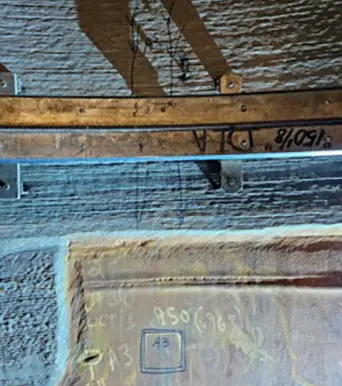
- Weld overlay application of ER312SS across two sections, and 8’7”H and 14’1.5”H in 360° bands
- Removal of two nozzle liners and weld overlay application of ER312SS to ID of both nozzles
Challenges
- Several Manual Processes Required: The digester had 66 screen blocks/clips, 99 screen plates, and many screen backing rings that all needed to be removed and re-installed. WSI prepared the base metal via grit blasting and grinded, gouged, and welded each by hand.
- Weld Metal Buildup Requirement: Several areas of the digester needed weld metal buildup in addition to the planned overlay, due to overly worn and corroded areas. WSI used this “buttering” layer to improve the metallurgical bond between the base metal and overlay material, resulting in a more resilient final weld.
- Nozzles Added to Project Scope: In addition to the weld overlay required for the digester itself, two nozzles at the base of the unit required overlay. Even with these additions, WSI had the ability to maintain the project schedule and meet its deadline.
- No Chicklet-Style Preheat: Due to potential issues with focused preheating that could lead to compromised structural integrity and cracking, WSI’s field team utilized rosebud tips for more uniform preheating over larger areas.
- Boat Sample Request: WSI successfully performed a metallurgical analysis on a cross-section of material cut from a completed weld as proof of quality control, which was done without delays to the initial schedule.
- Turnaround Schedule Changes: The turnaround was initially scheduled for October, then moved up to July, before being rescheduled again for September. WSI’s agile mindset quickly adapted to shifts with flexible scheduling and planning, and the team maintained clear and consistent communication with the customer.
The WSI Difference – Project Management and Engineering
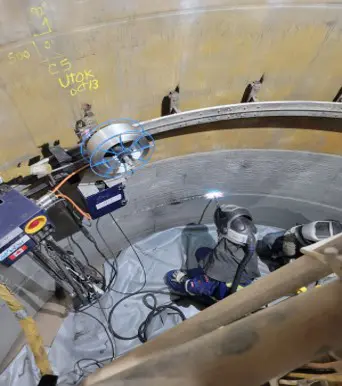
- Workscope Readiness: After several schedule changes, WSI mobilized quickly to the project site to complete weld testing and setup. Utilizing four machines operating 24 hours a day and working both courses in parallel, the project was completed on time and under budget with no safety incidents.
- Critical Path Analysis: WSI successfully identified and scheduled the most time-sensitive activities necessary to complete the project on time. Utilizing decades of experience, WSI’s Engineering Group created the most realistic project schedule, focused resources correctly, prevented bottlenecks and delays, and provided a clear prediction of project duration.
- WSI Owned/Built/Maintained All Equipment Deployed:
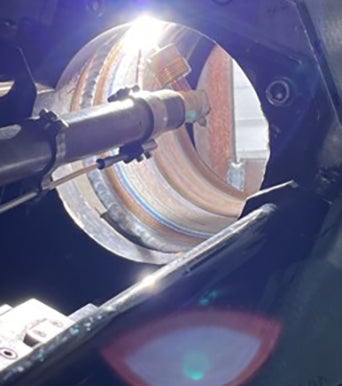
- NG4 GMAW Automated Weld Machines for SWOL
- Equipment mobilized to work both courses simultaneously
- Proprietary PPE utilized by all crew
Results
WSI performed on time and under budget to showcase why we are the leaders in pressure vessel repair and maintenance.
- Course 1 (Lower Digester):
- 358 square feet of weld overlay
- Course 5 (Upper Digester):
- 588 square feet of weld overlay
- Overall Project
- 946 total square feet of weld overlay
- Both courses completed in parallel
- Organizational Readiness for Schedule Change: WSI’s collective capability to prepare for, address, and adapt to unexpected, non-routine challenges and disruptions drove a successful project and backed up our reputation as a leader in the field.
- Multiple Machines, Multiple Levels: Rather than completing this project in sequential stages, WSI’s field teams performed work on both courses concurrently. This increased efficiency and reduced overall project completion by overlapping activities and sharing resources between the two levels.
- Optimized Schedule with No Budget Impacts: WSI effectively managed resources to improve efficiency and operational effectiveness, for better results without altering the project’s finances.
- Under Budget: WSI’s actual costs incurred on this project were less than the amount allocated, resulting in cost savings.
- Right First Time: First time quality with no repairs, rework, or corrections necessary.
- Goal Zero: WSI’s safe work practices resulted in ZERO injuries, lost time, and downtime.
Very impressed with the results, the ability to stay on schedule and budget even with delays. There were no safety issues, and the knowledge of the supervisors was unmatched.”
– Mechanical Engineer